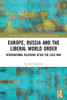
Overview
Hasanli uses a range of newly available archival sources to unveil key aspects of the Soviet Union's relations with its southern neighbours in the immediate aftermath of the Second World War. Covering relations with Turkey, Iran and China, Hasanli examines how Stalin strategized Soviet influence over the Bosporus and Dardanelles, Iranian Azerbaijan and Xinjiang. At various times this involved degrees of coercion, diplomacy, espionage and mediation. While the Cold War has typically been associated with tensions in Europe, some of its earliest movements in fact occurred in Central and Western Asia. In particular, Hasanli argues, the period from 1945 to 1947 was an active phase of Soviet expansion to the south and a new Stalin-Molotov doctrine. These regions were used as a testing ground for Soviet expansionist policies, many of which were unsuccessful and thus important in the later shaping of Soviet policy towards the West. Valuable new insights from one of the foremost scholars of South Caucasia and Central Asia post-war history, for students and scholars of the Soviet Union.
- | Author: JAMIL. HASANLI
- | Publisher: Routledge
- | Publication Date: Jul 14, 2022
- | Number of Pages: 252 pages
- | Language: English
- | Binding: Hardcover
- | ISBN-10: 1032269731
- | ISBN-13: 9781032269733