Overview
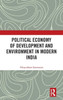
'The Politics of Swidden farming (Jhum)' offers a new explanation for the changes taking place in slash-and-burn (jhum or swidden) farming in the highlands of eastern India through an ethnographic case study. Today market-led agriculture is transforming land and labour relations. Jhum cultivators are beneficiaries of state schemes, including internationally funded, community-driven development or biodiversity conservation programmes. The book traces the story of agroecological change and state intervention to colonial times (including post Indian independence) when Nagaland was seen as the frontier of state and civilization. Contemporary agrarian change can be understood by contextualizing farming not just in terms of the science and technology of agriculture or conservation/biodiversity but also in terms of technologies of rule. For the colonial administrators of the Naga Hills - who saw their role partially in terms of rescue and record ethnography - jhum practices were part of backward Naga customs and traditions. Improving farming practices was bound up with indirect rule as a distinct process of governance involving forms of knowledge and intervention. It was political expediency rather than imperial science that changed local agroecologies and pressurized shifting cultivation. Crucially, neighbouring Naga terrace rice cultivators were promoted as offering a more civilized - yet local - alternative. 'The Politics of Swidden farming (Jhum)' demonstrates how contemporary agrarian development reflects this complex colonial heritage, including linkages between the state and village elites. Evangelical missionaries in the post-Independence period also contributed by appropriating local institutions to a Protestant (Baptist) ethic of work. Reinforcing the colonial state's privileging of rice as the crop of civilization, the missionaries' moral discourse installed new time disciplines geared to settled agriculture. To this end, the book adds a new dimension to the underdeveloped literature on shifting cultivation in South Asia by focusing on the social ecology of farming and agrarian change in the hills. It provides a comparative viewpoint to state-centred and donor-driven development in the frontier region by bringing in different actors and institutions that become the actants and agents of social change. Methodologically, the author engages with the many voices that shaped his fieldwork, providing evidence from in-depth household-based participant observation and life histories, and a household survey, while also drawing extensively on original archival research and colonial photography to provide documentation of colonial representations of the swidden landscape. The research was undertaken in a milieu of fear and violence, which raises further methodological and ethical issues.
- | Author: Debojyoti Das
- | Publisher: Anthem Press
- | Publication Date: Sep 28, 2018
- | Number of Pages: 272 pages
- | Language: English
- | Binding: Hardcover
- | ISBN-10: 1783087757
- | ISBN-13: 9781783087754